
The Hidden Fall Risks in Homes Families Often Miss
Discover overlooked household hazards and practical ways to prioritize fall prevention for older adults aging in place.
Why Familiar Homes Can Hide Serious Fall Risks
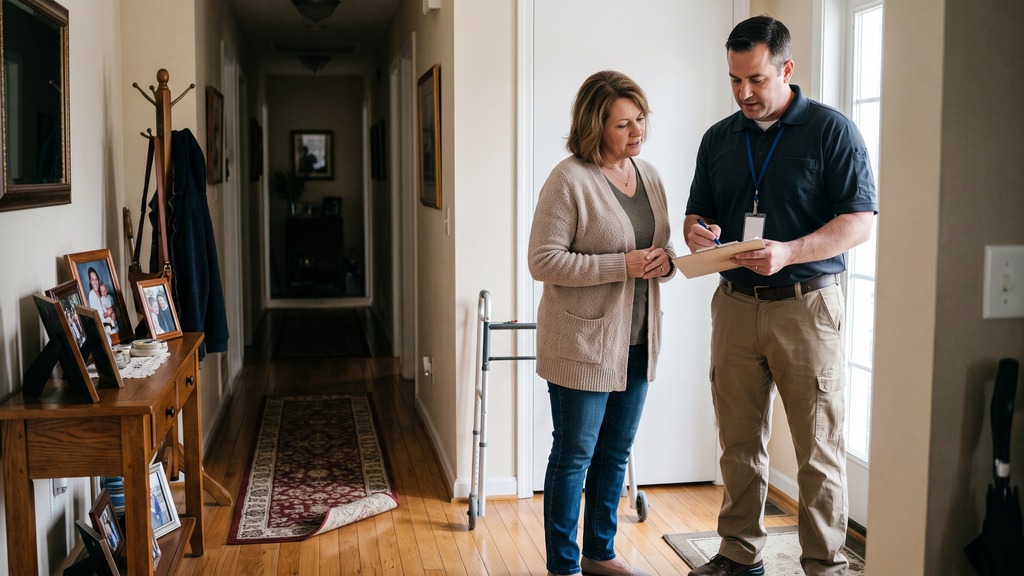
A home can feel safe simply because it is familiar. Older adults know where furniture sits, how many steps lead to the bedroom, and which hallway light switch is easiest to reach. That familiarity, however, can make gradual changes harder to notice. A dim bulb, a curled rug edge, or a narrow walkway may become a meaningful fall hazard when balance, vision, strength, or medication needs change.
Families should approach home safety as a routine review rather than a one-time project. Walk through the residence during the day and again after dark, paying attention to transitions between rooms, frequently used paths, and places where an older adult sits down or stands up. A useful fall prevention review asks not only, “Is this area clear?” but also, “Can this person safely use it when tired, carrying something, or getting up at night?” This perspective supports aging in place while identifying practical corrections before an emergency occurs.
Room-by-Room Hazards Families Commonly Miss
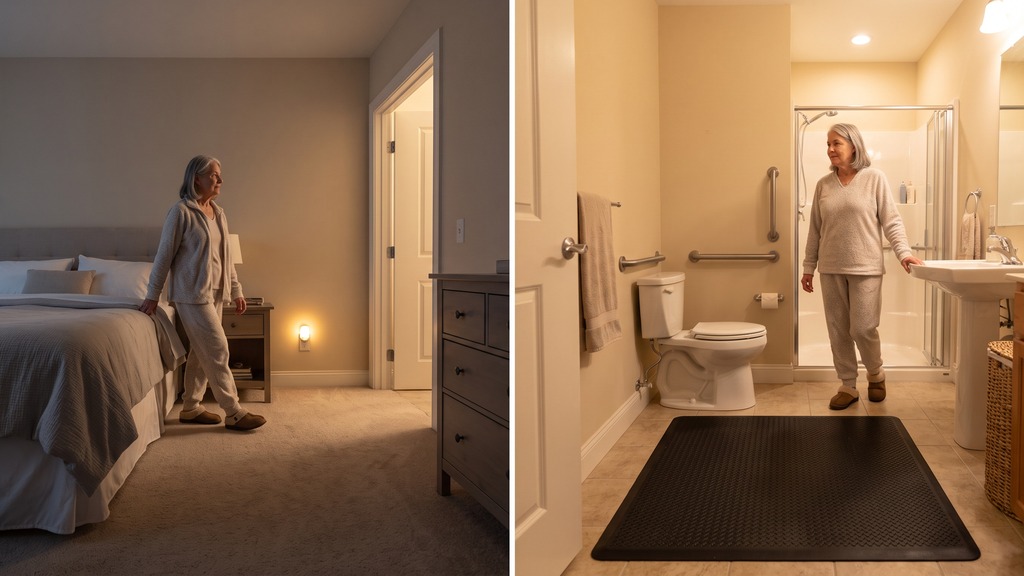
Nighttime lighting is one of the most overlooked home safety issues. The path from the bed to the bathroom should be continuously visible, not dependent on a distant switch. Motion-activated night lights, brighter bulbs, and illuminated switches can reduce confusion and help an older adult see obstacles. Keep cords, shoes, baskets, and pet items out of this route. In bathrooms, look closely at transfer points: stepping into a tub, lowering onto a toilet, and rising from a seated position can all require more strength and balance than expected. Properly selected grab bars and nonslip surfaces may provide needed support, but installation should match the wall structure and the user’s movement pattern.
Rugs and walkways deserve equal attention. Small mats at entries can slide, bunch, or catch a toe, while furniture may create a pinch point that is manageable during the day but dangerous when carrying laundry or using a walker. Secure appropriate rugs with rug tape, remove unnecessary ones, and keep stairs free of objects. Check handrails, thresholds, and changes in flooring as well. These simple observations often reveal the highest-priority fall risks without requiring a major renovation.
How to Prioritize Corrections and Follow Through
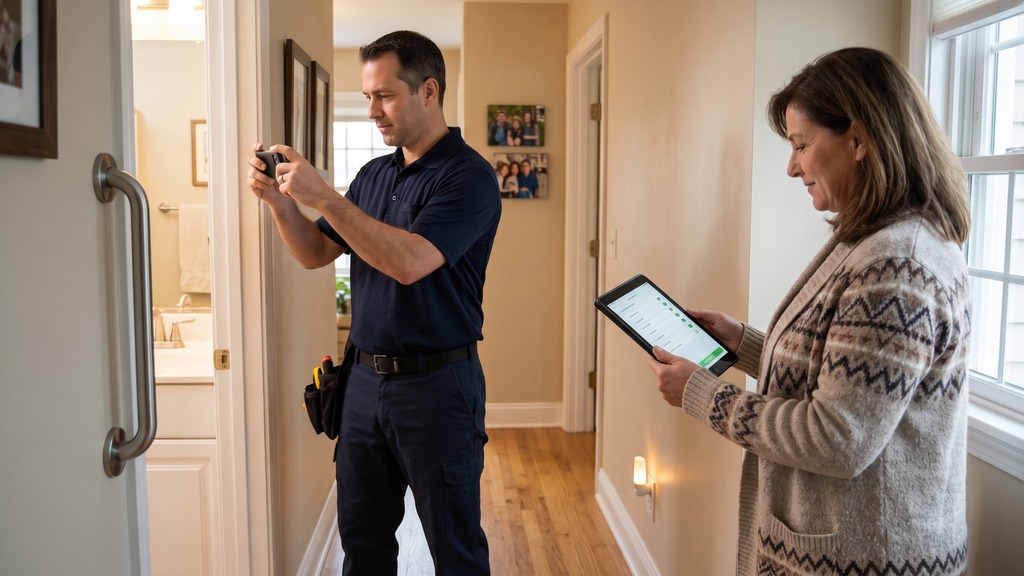
When families find several hazards, start with the routes used most often and the activities that involve transfers or stairs. Address immediate trip risks first: remove clutter, secure loose rugs, improve nighttime visibility, and keep essential items within easy reach. Next, consider supports such as grab bars, handrails, shower seating, or threshold changes. A correction should be appropriate for the individual, securely installed, and consistent with the home’s layout; improvised solutions can create new risks.
Remote caregivers and care managers can make follow-through easier by using a documented home-safety assessment. A trained technician can review entrances, stairs, bathrooms, bedrooms, lighting, rugs, and walkways, complete approved minor fixes, and identify work outside the service’s scope. Same-day photographs, measurements, invoices, and recommendations give families a clear record of what changed and what remains. Home safety is not a guarantee that falls will never happen, but a repeatable process helps households respond as needs evolve. Regular reviews after illness, a fall, a medication change, or reduced mobility can make aging in place safer and more sustainable.